Tag Archives: Facebook
Breaking Down Social Media : Finding a Soul in Brands
The term social media is largely misused and misunderstood.
You can’t have one social media strategy, or just decide to “do social media”. You have to realize what the term represents, that’s the first challenge I see when I speak with most people considering social for their businesses.
The Basis of Media
When you are speaking about using social media as an outreach tool in the general public the first thing you have to realize is that none of those people are reading “these” articles – the dialogue we all have about it on-line , its of no interest to them.
The people you are trying to reach are living their lives. Reaching them becomes marketing – just as you try and do in magazines or radio ads or newspapers. That’s the media part of the term.
In turn, from a business owner’s stand point, making decisions about social media use has to come from understanding deeper objectives and being in touch with your organization as a whole. Social media is not a new marketing strategy or sales vessel. It’s not a substitute for customer service. It’s not about broadcasting a new logo or flooding a channel with messages, it’s about a mindset.
What is the “Social” Really About?
Social is about this ability for consumers, employees, and all people to be connected. People using the on-line space to further their knowledge, interact with others, do research, play games, express themselves, grow, laugh, be entertained and of course throughout all this to share… The social part is about where you are reaching them and it’s the entire basis of all these pillars of social marketing success.
I think sometimes businesses, people looking into social and marketers forget the why of why you have to be genuine, or why the goal is
Social Connections | To Friend or Not To Friend : You had me at Subscribe
My friend and Social Media Consultant, Linda Bernstein came up with a good question on her Facebook status, she wanted to know if people friend people whom they do not know. It’s a great question that many people have varied perspectives on. Some people think of Facebook as a place they are building a community, whereas others keep it simple including only “real life” friends, in some cases, colleagues and co-workers.
Facebook is a very particular social network, and the way one handles it, should be different in strategy as compared to a Google +, Linked In, or Twitter.

Social Strategist and Consultant Gigi Peterkin had a great comment to add to the discussion. You can check her out at http://gigipeterkin.com
Who will you let into your inner circle?
In this post, I am going to focus on the Facebook question as it pertains to individual accounts and not pages.
The first thing I want to clarify here is that Facebook has privacy settings that allow you to keep your information private. Facebook also allows
Facebook Success Summit Day 1 & 2 – Highlights #FBSS12
-
The information contained in the Success Summit is extensive. Given my recent discussion on Facebook for Non-Profits, I don’t want to confuse my readers, so I will clarify that for any business, profit or non-profit, it is important to understand the workings of Facebook to be able to make informed decisions on the best strategy for you.
The strategy for a non-profit will be different , and involve different focus points, as well as (in my opinion) greater opportunities in their strategic approach than for a small business, consultancy, etc. Every single business must take their specific situation into account when building a strategy.
Therefore, take in all this awesome information, but remember your specific goals, and your community. This is what will dictate what elements you bring into your strategy and how.
Empowering yourself with the knowledge allows you to make good decisions!
Aviva Empowers Communities for a 4th Year Starting Today @AvivaCF #BeTheChange
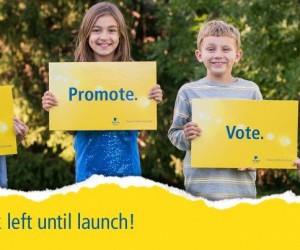
The Aviva Community Fund Launches this week for it’s 4th consecutive year. This social media based contest puts the power into the hands of the communities around them to have a vote and make positive change possible with much needed funding. The Fund has given away millions of dollars to grass roots organizations and individuals who have come up with ideas to make positive change in their communities. You can check out previous winners here.
“I wanted to make a difference in my community for all children with disabilities, so how could I pass on the opportunity to enter the Aviva Community Fund?” said Kelly Meissner, idea generator behind 2011 Aviva Community Fund Winner Kate’s Kause. After winning $60,000 Kate’s Kause was able to build a fully accessible playground for the entire Elmira, Ontario community to use.
Starting today, Canadians can go to AvivaCommunityFund.org to submit ideas that will have a positive effect on their local community. After rallying support from friends, family, neighbours and co-workers, the most popular ideas will have a chance to be funded with the $1,000,000 Aviva Community Fund.
In the competition’s first three years, Canadians overwhelmingly answered the call proposing over 6,000 ideas and casting more than six million votes in support of causes from every province and territory.
New to the competition this year is a specific prize of up to $150,000 for Canadian community groups or charities that support homeless and at-risk youth programs. - Aviva Canada
Speaking about Change
I am really honored to be Aviva’s Quebec Speaker at the Community Fund Launch, where I where I will be highlighting some of the amazing opportunities this project gives business people and individuals to really get involved in supporting their communities.
Not only does Aviva give an opportunity to communities to grow and receive support for their positive change ideas, they also give their brokers an opportunity to support the projects in their areas. A great way for an insurance company to give back on many levels.
This competition not only uses social media to help spread the word, and allow people everywhere to support these local organizations, but it also creates a pattern of engagement that extends far beyond the contest itself. I wrote about this last year on 12 Most, and I invite you to continue reading below to learn about the 12 Most Ways Aviva Community Fund Excels at Community Giving.
You can also check out the ideas starting to appear here, and remember it doesn’t cost you anything to support a cause, just a click of support every day to help your favorite cause make it through to round two!
12 Most Charitable Ways @AvivaCF Excels in Community Giving
by Mila Araujo
What if I told you I had a million dollars to give away, and all you had to do to get part of it was to send me your request and if you could get your friends to support you, I’d hand it out? What would you do?
Well the Aviva Community Fund is doing just that, but they aren’t throwing it at you directly, they are giving it to your community so that not only you benefit, but your whole area can share the wealth, improve your life, your family’s and everyone around you.
What really sets this social good project aside from the rest is that it is not just a giveaway, its a competition. A competition that touches every single area of community in a positive way, and all anyone has to do to make it happen is embrace the idea of community. The true idea of working together and seeing the results of teamwork for social good.
Here are the 12 Most ways that @AvivaCF Excels in Community Giving
1. Its about getting what you need
Want a million dollars? Well you can’t get it yourself. You need your friends, your family, your community to get involved. Doing this instantly creates positive energy in your group. In today’s world we are often too busy to talk to each other, to take the time out to stop and connect with those around us.
Social Media Timing is Everything: Understanding Automation’s Role in Community Engagement
Are You a Robot?
We have heard a lot of talk lately about the risks of automation in social media. Many people seem to believe that automating tweets, or posts work against social media best practices. In particular, genuine communication.
I think that the key to assessing this is in knowing the objective of your social media activities. In addition, the role that your social accounts are playing for the community they serve.
Manpower is a huge issue in this as well. Do you have a community manager who is dedicated to only running social media, or do you have social media as a “part” of the person’s role?
Automation used right doesn’t mean “impersonal”
There are positive ways that automation can be used which also respect and maintain the human touch. Here are some examples:
1. Scheduling Updates that contain photos, videos or your own posts to strategically appropriate times on both Facebook and Twitter
This content should be generally in line with your objectives, and the message you want to share within your community. There is no reason not to schedule these things. It allows you to be consistent. A huge factor in establishing a strong social media presence.
2. Scheduling distribution of articles via Twitter or Facebook so that the proper exposure is attained on peak hours in multiple time zones.
3. Automation responds to various needs and can help teams work together
Automation lends a Helping Hand in Time Management
Where “Automation Is Anti-Social” – What Not to Do.
It’s all about Balance
- Time for Blogging or other content creation
- Time for broadcasting the content
- Time for dialog and interaction based on the content & Identifying Opportunities for engagement elsewhere (ex: Social Search) <;- The most important aspects
- Time for analysis of interaction and results
The Appropriate Use of Automation
Automation does not Equal Auto-Pilot
- What is the acceptable delay to respond to comments on Facebook, Twitter, Your Blog?
- This will depend on the nature of your business, and the role your sites play.
- Itemize the type of content your organization is willing to automate.
- Example, blog posts, photos, videos, status updates, Direct Messages. Make sure to answer the question for yourself, what value does automating the selected items give your public, and your company. What are the potential risks?
- Ensure that there is a regular check point to follow through on these automated posts.
- Will it be every day, every hour? Set an expectation so you don’t lose yourself in the automated process. You want to respect the whole reason you are using automation – to stay connected. Leaving it on Auto-Pilot is not acceptable, and in theory does not meet the reasons you are doing it in the first place!
Providing Value
Do you use automation to expand your capabilities in social, or were you thinking it could just put your activities on auto- pilot while you head out to the beach?
What do you think?
Do you have any tips to add?
A Social Media & Digital Property Estate Plan – Till Death Do Us Part or Beyond
According to an article in The Sun, Bruce Willis intends to leave his music collection to his kids after his death, however, the article reports, according to their interpretation of the user agreement even though you pay for the music, the music is for the purchaser’s personal use, they are not selling it to you. So, you do not own it. As a result, Bruce Willis would have a problem – you can’t leave something you don’t own to your kids!

What are we all doing? Are we all downloading and paying for apps, books, music, etc. – yet none of us own any of it?! Surely every site that you “purchase” things from has a user agreement. How many of us are reading the small print and are we even understanding what it means? When I posted the link to the article on my Facebook Page, my friend Merlin U Ward wrote: “What will you do with your digital assets when you die?” Great question, but even more so is the question of what exactly are our digital assets? Do we have any? If the information in this article is correct, then it could be argued that it’s not an investment, and the “purchases” may actually just be loaners. It is definitely something to investigate and learn more about. How much are you spending on digital downloads? An even greater question, how would any company enforce this?
Do You Read Your User Agreements?
I speculate that this all came up because Bruce Willis was doing some planning and in making sure he was dotting all his “i”‘s , checked the agreement.
How many people actually read their user agreements? Most of us aren’t looking for this information as we download things, or even sign up for social media sites.
Every site has it’s own user agreement, perhaps this is a good opportunity to spend some time to understand what it is we are si
gning on for as we purchase things, or invest in accounts.
What about Social Sites? What Happens there?
This is a great article that gives and overview of what happens to your Facebook page after you die What happens to all my social networking information when I die? . I was pleased to learn that Facebook takes the time to actually give some very considerate options to the user’s family in such a sad and difficult time. They apparently can leave the page as is, or, at the request of the family can turn it into a memorial site. I think that’s pretty “human” of them.
This CNET article from 2010 covers how the Facebook and Twitter policies compare. I am happy to see both provide opportunity for the memorial concept. We invest so much into our social media activity, it’s nice to know it won’t all get wiped away in a flash.
So in the end, is it about you?
The big question is, what do you want to happen with your sites years down the line? Some people might want their entire sites taken down, others may want to keep things up so others could continue the connections. Circumstance certainly would play a role.
What would you do?
Would you leave your sites up so those you cared about could continue to honor and celebrate your life? Sharing stories together “In Memoriam” on your original page?
What if what you want is not what your family would want? How do these things get decided?
Interestingly there are services emerging to respond to this very thing, among them are Legacy Locker which offers free and paid plans, and Secure Safe, which offers a “Data Inheritance” service.
We have a lot to manage and think about when it comes to our evolving commitment to using social media, the information we share online, the investment of our time, and in Bruce Willis’ case even the investment into “buying” and building a music collection.
What do you think of this? The responsibility is on us as users to understand what we are signing on for. In the case of the downloaded music, I think it’s just the tip of the iceberg… and Bruce Willis is going to take it on for us.
Fast Track Marketing: QR Code Driving Fans Closer |Strategy|Engagement
QR Codes are a tough sell in social media circles. Despite this, the average consumer surely sees multiple codes a day scattered on business cards, ads on walls, magazines, newspapers, billboards, TV ads, and even restaurant menus. In recent research from ScanLife, a popular QR Scanning App, the data not only shows consumers scanning when they are on the go, but even when they are at home! If that doesn’t indicate increasing comfort with the convenience of the QR method of communication, I am not sure what does.
Why do so many oppose them in the social marketing field? The QR code may seem “boring” to a graphic artist, or annoying to a social marketer, but to the average consumer armed with a smart phone and a scan app, I’d go as far as say it can be magical. You never know what lies behind the code until you see it.
The State of Mobile
According to Cisco‘s Mobile Forecast Highlights, in North America, the number of smartphones grew 58% during 2011, reaching 138 million in number. They further predict, in their VNI Mobile Forecast Highlights, 2011 – 2016 that in North America, the number of smartphones will grow 1.8-fold between 2011 and 2016, reaching 253 million. Why is the potential application of QR coding important? Look at it as your added opportunity to entice the mobile user, to connect somewhere that everyone is becoming increasingly more comfortable.
According to a recent Scanlife report in the second quarter of 2012, the company’s QR codes got 16 million scans, almost 10 million more than what it saw in the second quarter of 2011. in addition the rate of scans per minute Scanlife is seeing has increased by 5 times compared to the same time last year. You can check out a pretty awesome infographic here.
Why Aren’t You Seizing The Opportunity?
QR Codes are one of the easiest ways for consumers to easily respond to an ad, and get the information they are looking for. They allow the
Seduced by the numbers? The Honeymoon is Over.The Value of a Facebook Like {Casestudy}
The biggest challenge faced by social media professionals entering an organization who is at the onset of social media integration will be confronting the popular misconception that “likes” on Facebook & followers on Twitter is the measure of social media success.
When social media first started to gain attention as a new business opportunity, it stands to reason that in absence of true measurement tools, the only number a business or organization could understand easily, and “measure” would be the number of followers, or fans.
Many organizations, due to lack of familiarity or understanding of social, are convinced that there is success in the numbers; that “likes” or followers equal reach, and that if they attain high subscription – whether it be on Twitter, Google Plus, or Facebook – that this will equal success.
The Wrong Numbers.
Social business is still in the early stages, as new technology and strategy intertwine to find stronger measures of success on various levels –
Social Consumerism and The Great Divide | Social Business Values #Custserv #Leadership #Strategy
As more and more brands are learning how to do social business and integrating social mindsets into all areas – the divide between the traditional business (non-social), and the social business is evident. For the social consumer the differences can be intolerable.
Will the rise of the social consumer change you?
In the video short below “Drive Blog: Episode 1″ , I discuss the difference I see in businesses that demonstrate social values, and share the story of what happened when Chris Brogan tried to get some resolution to an issue on a Facebook Page. What would your response have been if Chris Brogan wrote to you on your brand’s Facebook page, and is this how you would treat every customer?
In exploring the attributes of the Social vs. Non-Social Mindset I found several key differences:
Is Pinterest the New Mall of America? The Shopper’s Playground? #SMM #Study #Marketing #BrandChat
Recent Studies Suggest Pinterest is More Successful at Click Through Sales Then You Might Think. In view of this, a discussion on strategy and potential opportunities. Is it time to rethink Pinterest? This post is based on the information found in the May 31st E-Marketer Article:
Is Pinterest Really Leading to Product Purchases?
When I saw the results of the studies below, I have to admit I was pretty shocked. I found it hard to believe that the data was available to justify the high numbers being sited by the study below. In particular, with Pinterest only having been in the market for about a year, to make such progress in achieving this rate of success in click through sales seemed astronomical.


comments